

You probably have hundreds—or even thousands—of connections across LinkedIn, your phone, and social platforms.
But here's a question worth asking: How many of those people would actually respond if you reached out today?
For years, we've been taught to measure our network by numbers. More contacts. More followers. More connections. More business cards collected at events. The assumption is simple: the larger your network, the greater your opportunities.
The reality is very different.
- A large contact list doesn't equal a strong network—relationships require trust and active engagement
- Most networks are filled with dormant relationships that rarely create momentum or opportunities
- Visibility into your network is more valuable than simply collecting more contacts
- The most valuable connections are often hidden behind mutual relationships you haven't explored
The Myth of the Massive Network
Many professionals proudly mention having 2,000+ LinkedIn connections. Yet when they need an introduction, a referral, a new client, or a strategic opportunity, they often start from scratch.
Why? Because a connection is not a relationship. A name in your contacts list doesn't mean trust exists. A LinkedIn connection doesn't guarantee relevance. A phone number doesn't create access.
Most networks are filled with dormant relationships—people we met once, connected with online, or exchanged details with years ago. They're visible, but they're not active. And when opportunities arise, inactive connections rarely create momentum.
According to networking studies, the average professional has over 1,000 connections across all platforms, but regularly engages with fewer than 50. The rest represent dormant potential waiting to be activated.
The Hidden Gap
The biggest misconception in networking is believing that visibility equals accessibility. Just because someone appears in your network doesn't mean they're part of your current professional ecosystem.
Think about it: People change jobs. Industries evolve. Relationships fade. Context disappears. Over time, many connections become distant nodes in a digital database.
The result? You may have a large network on paper while operating with a very small network in practice.
Periodically audit your network. Identify which connections are active, which have drifted, and which could be re-engaged. A small, active network consistently outperforms a large, dormant one in creating real opportunities.

Reframing What a Network Really Is
A network isn't a collection of contacts. A network is a collection of relationships. More specifically, it's a collection of people connected through trust, context, and shared experiences.
The most valuable opportunities rarely come from cold outreach. They come through warm introductions. They come from people who can say: "I know someone who can help," "Let me introduce you," or "You should talk to them."
The strength of your network isn't measured by how many people you know. It's measured by how many meaningful pathways exist between you and the people you need to know.
- Trust matters more than volume — A few trusted relationships create more opportunities than hundreds of surface-level connections
- Context creates value — Knowing the history and relevance of a relationship makes it actionable
- Pathways are power — The ability to navigate from one contact to another through mutual trust is the essence of networking
- Engagement keeps networks alive — Regular touchpoints maintain relationship health and readiness
- Quality compounds over time — Strong relationships generate referrals, insights, and opportunities that grow exponentially
of professionals say that warm introductions are significantly more effective than cold outreach in securing new opportunities
Turn Contacts Into Connections
Discover how Know Connections helps you transform your contact list into an active, valuable network.
Book a DemoThe Conversations You Never Had
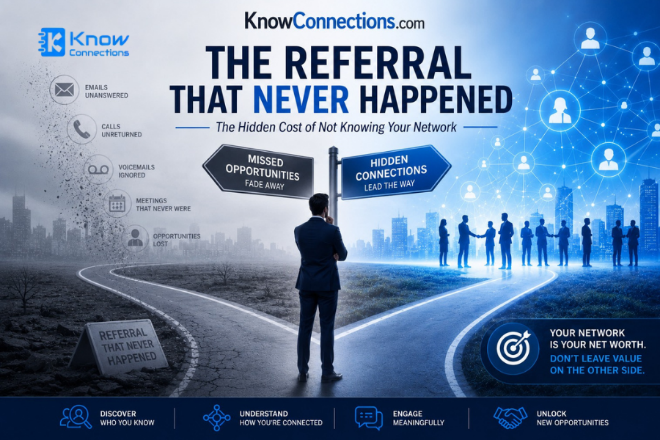
Here's where things get interesting. Many of the most valuable relationships in your network are often invisible. They're hidden behind mutual connections, past colleagues, former clients, family friends, suppliers, mentors, and people who already trust someone you trust.
These opportunities remain undiscovered not because they don't exist—but because most networking platforms don't reveal them. As a result, professionals spend enormous amounts of time pursuing strangers while overlooking warm pathways that are already available.
The opportunity isn't always to meet more people. Sometimes it's to better understand the people already connected to your world.
Don't assume you've exhausted your network's potential just because you've been in touch with your immediate contacts. The real value often lies two or three degrees away—in the networks of your network. Explore those connections.
Activating Your Network
To move from a contacts list to a true network, you need to shift from passive collection to active engagement. Here's how successful networkers build relationships that create real opportunities.
- Start with a network audit — Review your contacts and identify who you haven't engaged with recently. Prioritize reconnection.
- Give before you ask — Share an article, offer an introduction, or provide useful information without expecting anything in return.
- Reconnect with context — When reaching out after a long gap, reference a shared experience, past conversation, or common connection.
- Build intentional touchpoints — Schedule regular check-ins with key contacts. Consistency matters more than frequency.
- Track relationship intelligence — Keep notes on where, when, and why you met someone. This context is the currency of meaningful networking.
Frequently Asked Questions
Common questions about turning your contacts list into a powerful professional network
Isn't a large LinkedIn network still valuable?
Yes, but only if those connections create opportunities, conversations, or introductions. A large network can increase visibility, but visibility alone doesn't create trust or access. The quality of relationships matters more than the quantity of connections.
What's the difference between a contact and a relationship?
A contact is someone whose information you have. A relationship is someone with whom trust, context, and mutual understanding exist. Opportunities are far more likely to come through relationships than through contact lists.
Why do many professionals struggle despite having thousands of connections?
Because most connections are dormant. They may have connected years ago, changed industries, switched roles, or simply lost touch. A large network doesn't automatically translate into an active support system.
What makes a network truly valuable?
A valuable network consists of trusted relationships, relevant connections, and people willing to make introductions. The strongest networks help create opportunities through credibility and shared trust.
Are warm introductions really more effective than cold outreach?
In most cases, yes. Warm introductions reduce uncertainty and establish immediate trust. People are naturally more receptive when introduced through someone they already know and respect.
How can I activate a dormant network?
Start by reconnecting without asking for anything. Share insights, congratulate achievements, offer help, or simply check in. Consistent, genuine engagement often reactivates valuable relationships.
How often should I engage with my network?
Networking works best as an ongoing habit rather than an occasional activity. Maintaining regular touchpoints throughout the year keeps relationships active and meaningful.
Is networking only important for sales professionals?
No. Whether you're an entrepreneur, executive, recruiter, consultant, investor, or job seeker, strong relationships can create opportunities that aren't publicly visible.
Why do hidden connections matter?
Hidden connections reveal shared relationships you may not know exist. These mutual connections can provide context, credibility, and introductions that would otherwise be impossible to discover.
How do I know if my network is healthy?
A healthy network isn't measured by connection count. Instead, ask: Who would respond if I reached out today? Who would introduce me to a key decision-maker? Who have I genuinely helped in the last six months? The answers often reveal the true strength of your network.









.png)