
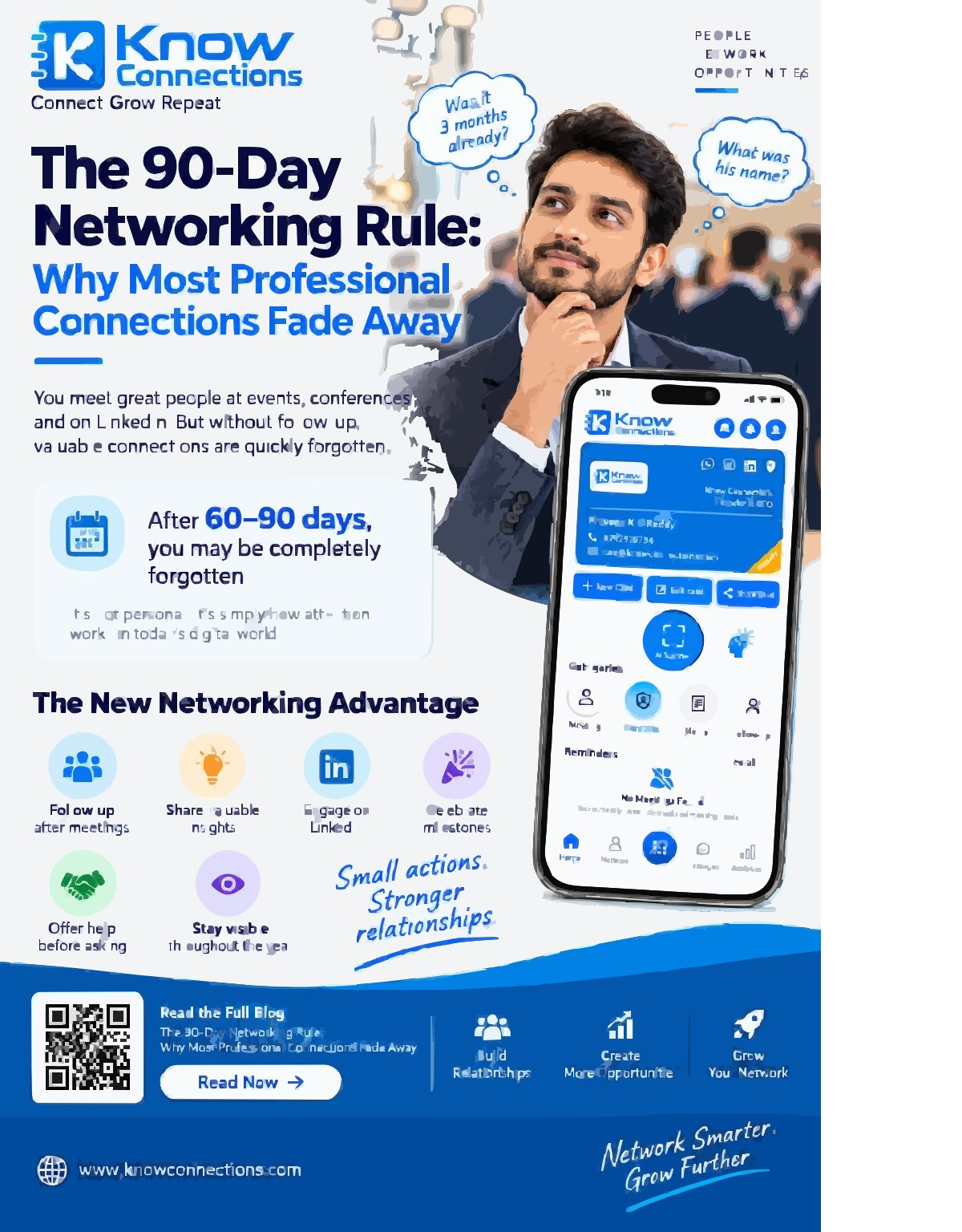
In today's fast-paced business world, professional networking is often seen as the key to career growth, lead generation, and business success. Yet most professionals unknowingly lose valuable opportunities because they fail to stay connected after the first interaction.
Whether you meet someone at a conference, networking event, trade show, business meeting, or on LinkedIn, the relationship begins with potential. The challenge is keeping that connection active.
- Connections fade fast without reinforcement — often within 60–90 days
- Networking events create contacts, not relationships — follow-up does
- Every forgotten contact could represent a future client, referral, or opportunity
- Digital business cards make consistent, trackable follow-up far easier
The Science Behind Forgotten Connections
Psychologist Hermann Ebbinghaus introduced the concept of the Forgetting Curve, showing that people quickly forget information when it isn't reinforced.
The same principle applies to business networking.
When someone meets you, they remember your name, company, expertise, and conversation. But without follow-up communication, those memories gradually fade.
After a few weeks, you're one of many contacts.
After 60–90 days, you may be completely forgotten.
This isn't personal.
It's simply how attention works in today's digital world.
The Forgetting Curve isn't a networking flaw — it's basic human memory. The professionals who stay remembered are simply the ones who reinforce the connection before it fades.
Why Networking Events Alone Don't Create Opportunities
Every year, professionals attend countless networking events, conferences, exhibitions, and industry meetups.
They collect business cards.
They exchange LinkedIn connections.
They scan QR codes.
They promise to stay in touch.
Yet studies and real-world experience show that most of these connections never develop into meaningful professional relationships.
Why?
Because networking success isn't determined by how many people you meet.
It's determined by how many relationships you maintain.

The Hidden Cost of Poor Relationship Management
Every forgotten contact could represent:
- A future client
- A referral partner
- A strategic business partnership
- A mentor or advisor
- A career opportunity
- A valuable introduction
Many professionals spend years trying to grow their network while overlooking the contacts they already have.
Effective relationship management often delivers greater results than constantly searching for new connections.
The New Networking Advantage
The most successful professionals follow a consistent networking strategy.
They:
- Follow up after meetings and events
- Share valuable industry insights
- Engage through LinkedIn networking
- Celebrate milestones and achievements
- Offer help before asking for favors
- Stay visible throughout the year
These small actions create trust, familiarity, and stronger professional relationships.
Never Let a Connection Fade Again
See how Know Connections helps you track every conversation and schedule the follow-up that keeps a relationship alive.
Book a DemoDigital Business Cards Are Changing Networking
Traditional paper business cards often end up forgotten in drawers, wallets, or office desks.
Modern professionals are increasingly adopting digital business cards that make contact sharing easier, faster, and more memorable.
Digital networking tools allow professionals to:
- Share contact information instantly
- Update details without reprinting cards
- Connect through QR codes and NFC technology
- Track engagement and follow-ups
- Strengthen personal branding
As networking becomes more digital, staying visible becomes easier—but only if you maintain consistent communication.
Follow up within 24–72 hours of meeting someone new. Reference something specific from your conversation — it resets the Forgetting Curve and makes the relationship feel personal, not transactional.
The 90-Day Question
Take a moment and think about your most valuable professional connections.
Your clients.
Your business partners.
Your mentors.
Your referral sources.
Ask yourself:
When was the last time you gave them a reason to remember you?
If it's been more than 90 days, the forgetting curve may already be reducing the value of that relationship.
Final Thoughts
The biggest networking mistake isn't failing to meet new people.
It's failing to maintain existing relationships.
In an era of crowded inboxes, AI-generated outreach, and constant digital distractions, staying visible has become a competitive advantage.
The professionals who generate the most referrals, opportunities, and business growth aren't necessarily those with the largest networks.
They're the ones who consistently nurture their professional connections.
Because networking isn't about collecting contacts.
It's about building relationships that last.
Stay connected. Stay visible. Stay memorable.
Frequently Asked Questions
Common questions about staying connected and beating the forgetting curve
Why do most networking connections fade after an event?
Because networking events create a burst of new contacts, but most professionals don't have a structured follow-up process. Without timely engagement, even promising relationships lose momentum.
Is collecting business cards still valuable in a digital world?
Yes, but only if those contacts lead to meaningful interactions. A business card, LinkedIn connection, or QR code scan is simply the beginning of a relationship—not the relationship itself.
How soon should I follow up after a conference?
Ideally within 24–72 hours. Following up while the conversation is still fresh significantly increases the likelihood of building a lasting connection.
What's the biggest networking mistake professionals make after events?
Assuming they'll remember to reconnect later. Without a system for tracking conversations and scheduling follow-ups, valuable contacts often get forgotten.
Why do LinkedIn connections often go nowhere?
Because many professionals treat LinkedIn as a contact database rather than a relationship-building platform. Connection requests without meaningful interaction rarely create long-term value.
How can I make my follow-up messages more effective?
Reference your conversation, provide context, and focus on building a relationship rather than immediately asking for something. Relevance and personalization matter more than perfect wording.
Should I follow up with everyone I meet?
Not necessarily. Prioritize contacts based on relevance, mutual interests, potential opportunities, and the quality of your conversation.
What's a good system for managing new contacts?
A simple process works best: capture notes immediately, categorize contacts by priority, schedule follow-up reminders, and maintain periodic touchpoints. Consistency beats complexity.
How often should I stay in touch with professional contacts?
There's no universal rule, but meaningful contact every few months helps keep relationships active. The goal is to remain relevant without becoming intrusive.
Why do some people seem naturally better at networking?
Often, they're not better at networking—they're better at follow-up. Successful networkers focus on maintaining relationships, not just creating them.










.png)